Home

“Mr. Knox played with assurance and complete command of his instrument, providing a convincing case for the solo potential of the tuba.”
PITTSBURGH POST GAZETTE
Biography
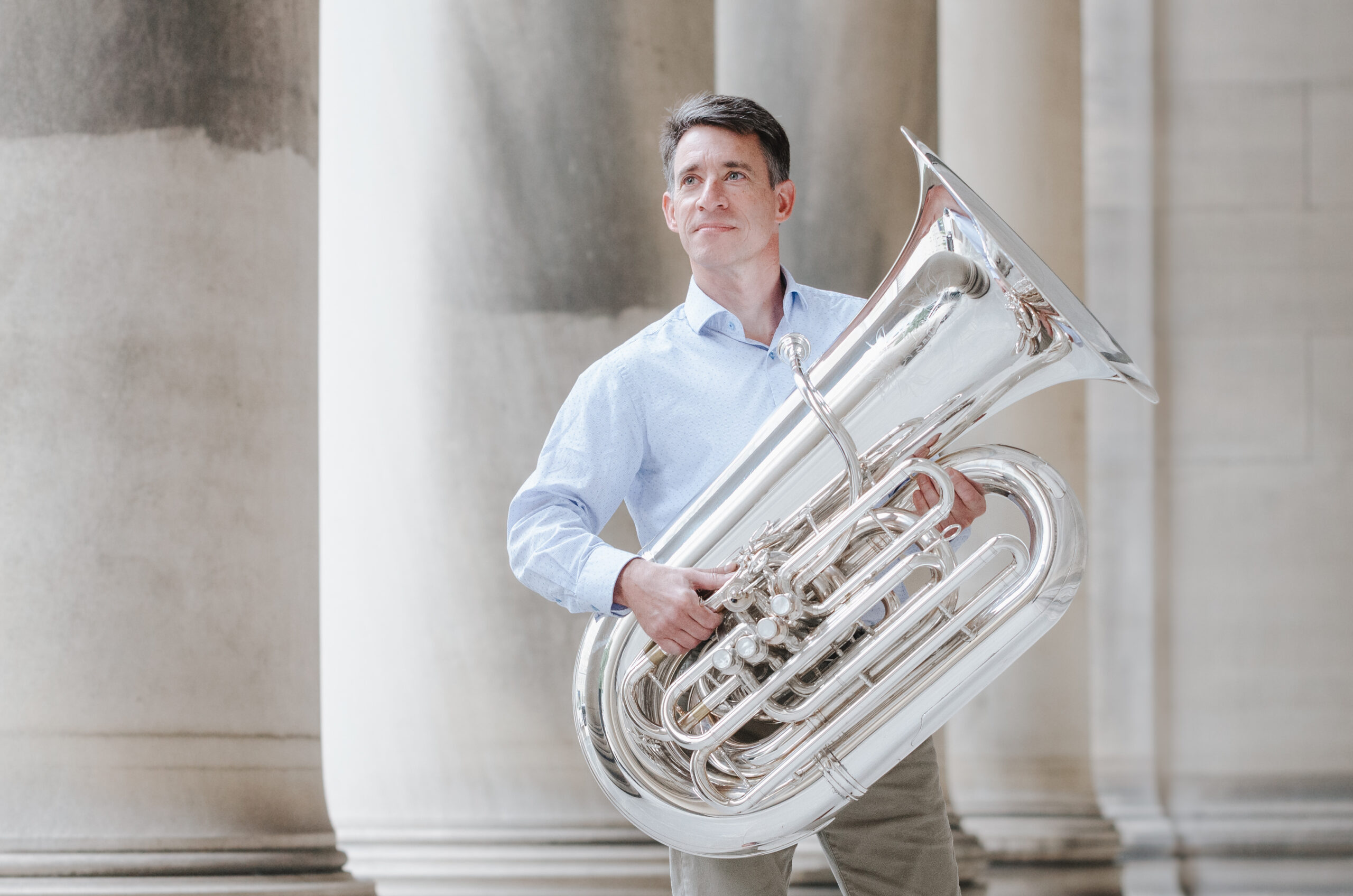
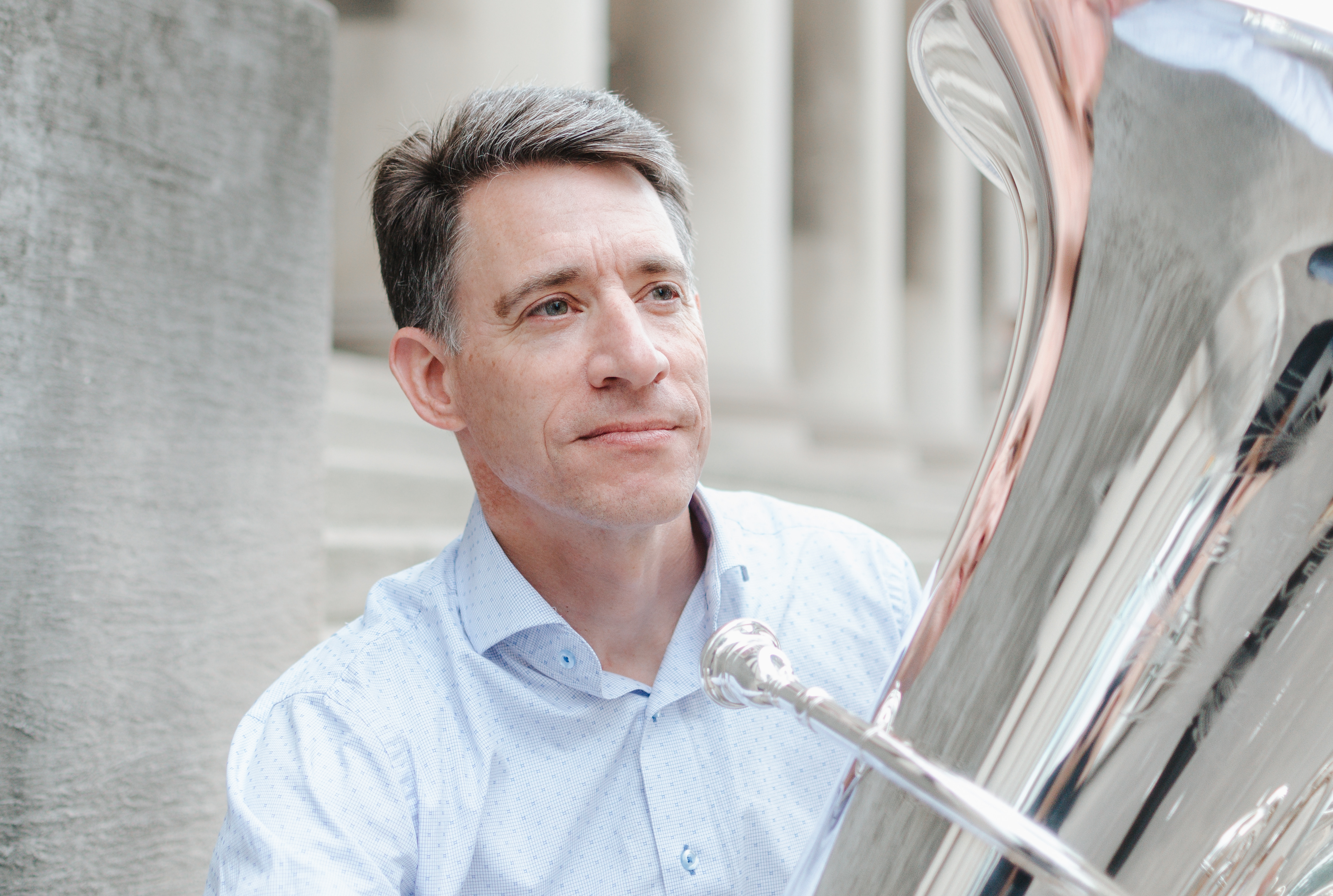
Craig Knox is Principal Tuba of the Pittsburgh Symphony Orchestra, and a founding member of the Center City Brass Quintet. With these ensembles and others, he has performed for audiences across the U.S., Europe, and Asia, and been heard on Grammy-Award winning recordings and concert broadcasts around the world.
As a soloist, he played the world-premiere performances of concertos by Jennifer Higdon and Andre Previn, has appeared with the Pittsburgh Symphony Orchestra, U.S. Army Band (Pershing’s Own), and Tokyo Symphony Orchestra, and released an album of music for tuba and piano titled A Road Less Traveled. Mr. Knox holds teaching positions at the Carnegie Mellon University School of Music in Pittsburgh, and the Curtis Institute of Music in Philadelphia. Many of his former students hold major professional performance and teaching positions around the country. Sharing the beauty of music with others is a lifelong pursuit and passion of Mr. Knox, which is realized by his performance and teaching activities.
Media
Playlist
5:17
3:02
2:19
3:43
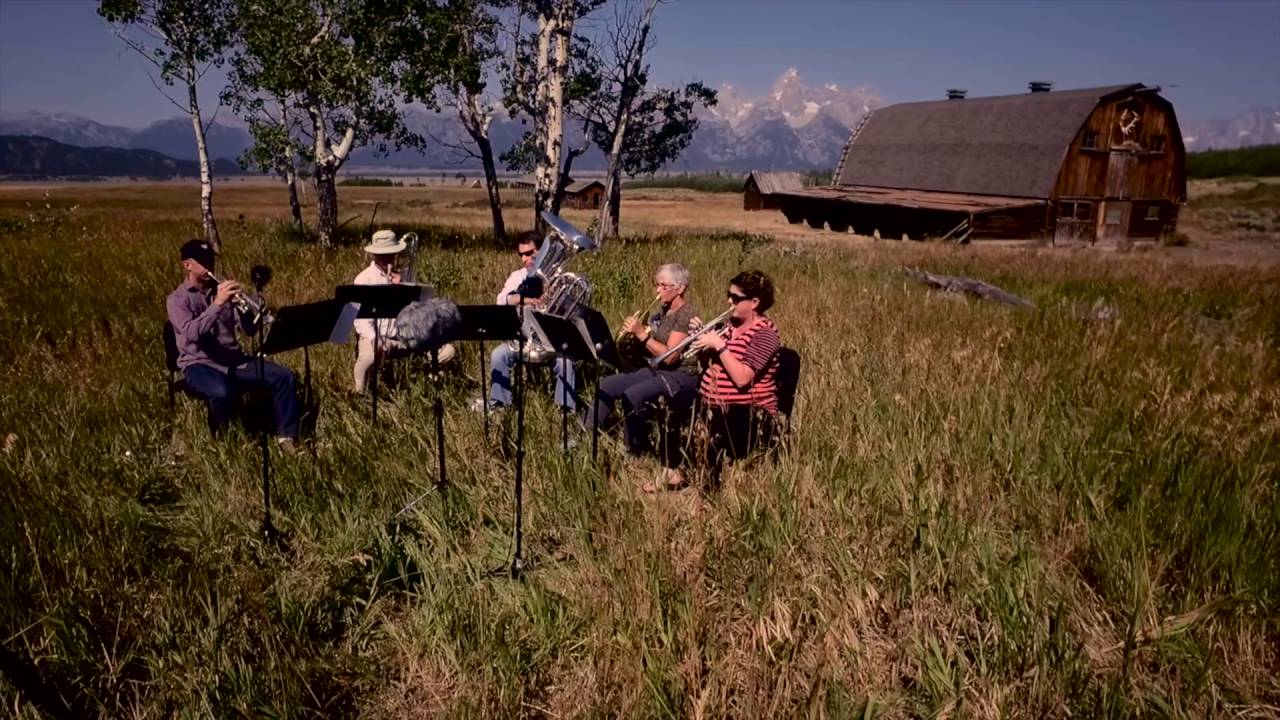
7:20
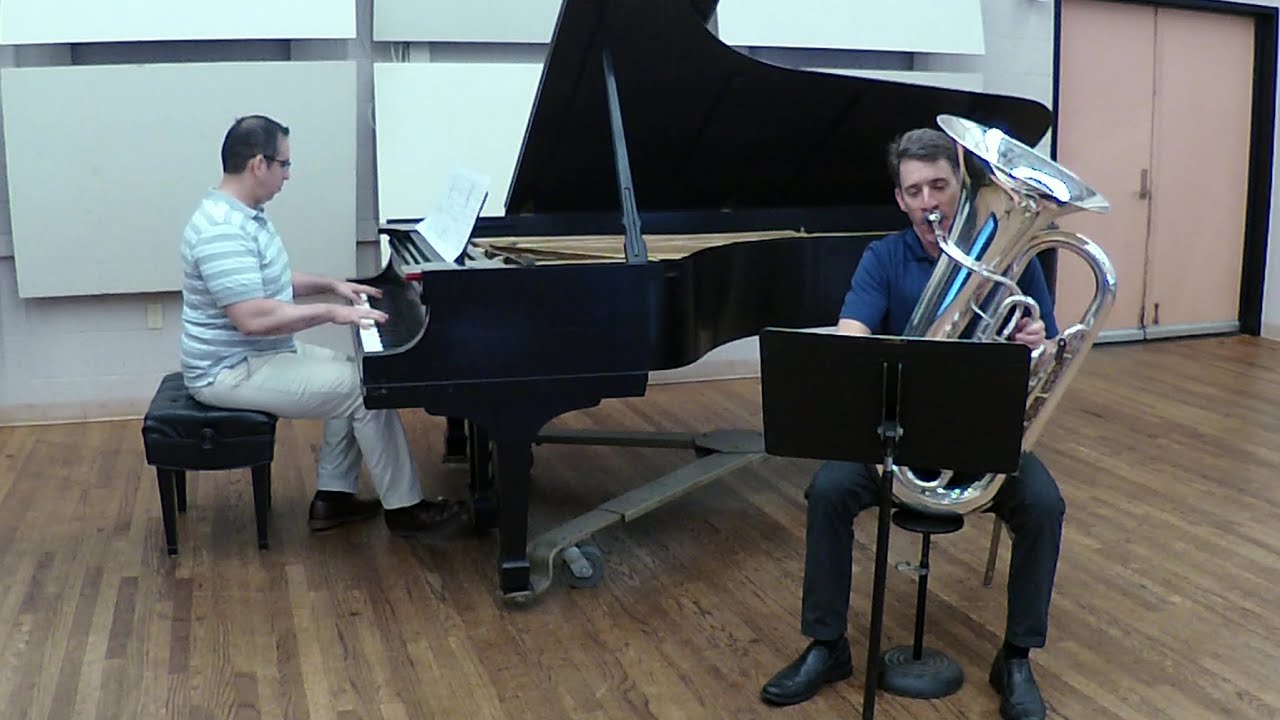
3:26
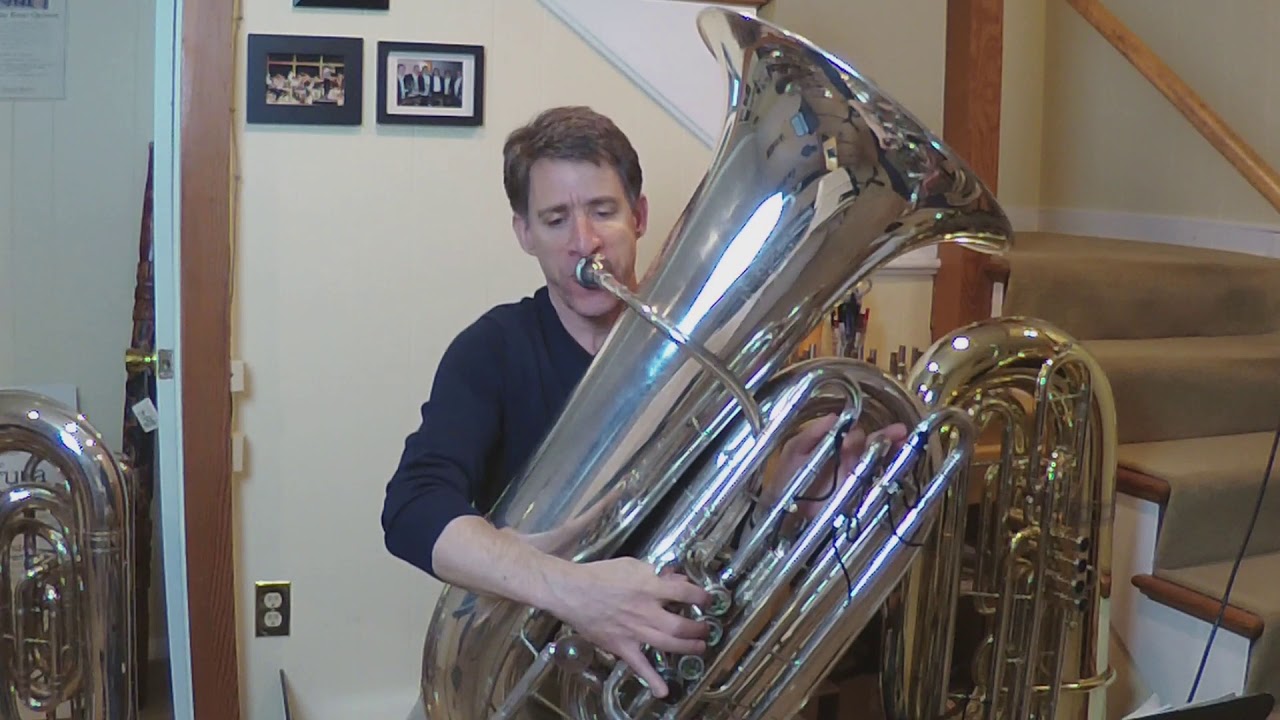
1:50
59:42
5:31
1:15
1:01:27
1:30:26
Recordings
Listen to Craig on the following commercially available recordings:
Teaching
I'm lucky to have had fantastic teachers - world-class players who were knowledgeable and passionate about music, and committed to the success of their students. I benefited from the great teaching I received, and it's my goal to pass on what I've learned to the next generations of musicians. One of the things I most enjoy about teaching is establishing a direct connection with each student and crafting a unique approach that is most effective for their individual needs and style of learning. I frequently present master classes and workshops at schools, seminars, and festivals around the world, and am on the faculty at the Curtis Institute of Music and Carnegie Mellon University. Graduates of my collegiate tuba studios now hold permanent positions in professional ensembles around the country, including the Seattle Symphony, Phoenix Symphony, Louisville Orchestra, U.S. Naval Academy Band, River City Brass Band and others, as well as teaching positions at the collegiate, high school and grade school levels. In addition to working with tuba players, I regularly work with conservatory and professional musicians on every orchestral instrument, helping them to prepare for auditions and competitions, and achieve their highest potential as performers.
Frequently Asked Questions
How many students are in your studios?
I typically have 4-6 tuba students at Carnegie Mellon University and 1 tuba student at Curtis.
How many openings do you anticipate for next Fall?
There is not an anticipated opening at Curtis for the Fall of 2026 for either an undergraduate or graduate student. Likewise, there is one opening for my Carnegie Mellon University studio for the Fall of 2024, for either an undergraduate or graduate student.
How good are scholarship opportunities for students at both schools?
At Curtis, all students attend on a full-tuition scholarship. An additional allowance is granted for living expenses, and the school is committed to its students graduating without student-loan debt.
Carnegie Mellon University offers graduate assistantships covering up to full tuition cost. Undergraduates are eligible for university financial aid and additional merit scholarship aid.
Do you teach private lessons?
Private lessons can be arranged as my schedule allows, and take place in Pittsburgh or via Zoom. Please contact me directly for more information if you are interested in scheduling a private lesson.
Do you offer trial lessons to prospective students?
I receive many requests from prospective students who would like to schedule a trial lesson. Please note that due to the large number of these requests, I cannot offer private lessons at no charge. The one exception is for prospective Carnegie Mellon University students who schedule a campus visit on a day I am teaching, who are welcome to observe my entire teaching day, and for whom I will make time for a brief introductory private session. My schedule while teaching at Curtis generally does not allow for outside private or introductory lessons in Philadelphia.
How important are introductory lessons with regards to the admission process?
I always want to make clear that private or introductory/trial lessons are not part of the audition process. My auditions are thorough and allow me to make admissions decisions without any additional meetings. Therefore, prospective students should not feel the need to schedule a lesson in order to be seriously considered for admission to the studio. Consider scheduling a lesson if you are looking for an educational session. Also, please note that I will schedule lessons at no charge (in-person or zoom if necessary) for students who are accepted into the studio, in order to help them make their decision about where to enroll.
I encourage students who are considering applying to the tuba studio at Carnegie Mellon University or the Curtis Institute of Music to read the information on both sides of the boards below and visit the university websites. If you still have specific questions, you may e-mail me at psotuba@gmail.com.
Carnegie Mellon University
The Curtis Institute of Music
Resources
CRAIG KNOX
Principal Tuba, Pittsburgh Symphony Orchestra
Founding Member, Center City Brass Quintet
Craig Knox is Principal Tuba of the Pittsburgh Symphony Orchestra, and a founding member of the Center City Brass Quintet. With these ensembles and others, he has performed for audiences across the U.S., Europe, and Asia, and been heard on Grammy-Award winning recordings and concert broadcasts around the world.
As a soloist he played the world-premiere performances of concertos by Jennifer Higdon and André Previn, has appeared with the Pittsburgh Symphony Orchestra, U.S. Army Band (Pershing’s Own), and Tokyo Symphony Orchestra, and released an album of music for tuba and piano titled A Road Less Traveled. Mr. Knox holds teaching positions at the Carnegie Mellon University School of Music in Pittsburgh, and the Curtis Institute of Music in Philadelphia. Many of his former students hold major professional performance and teaching positions around the country.
Sharing the beauty of music with others is a lifelong pursuit and passion of Mr. Knox, which is realized by his performance and teaching activities.
“Mr. Knox played with assurance and complete command of his instrument, providing a convincing case for the solo potential of the tuba.”
—Pittsburgh Post-Gazette
Craig Knox has been Principal Tuba of the Pittsburgh Symphony Orchestra since 2005, where he holds the Dr. Mary Ann Craig endowed chair. He previously held positions of Acting Principal Tuba of the San Francisco Symphony, and Principal Tuba of the Sacramento Symphony and the New World Symphony (Miami). He has also performed as a guest artist with many other major orchestras, including those of Philadelphia, Cleveland, Chicago, Detroit, Minnesota, and Seattle, the National Symphony Orchestra, and the Orchestre de la Suisse Romande of Geneva, Switzerland. For twenty-five years, he was co-principal tuba of the Grand Teton Music Festival in Jackson, Wyoming.
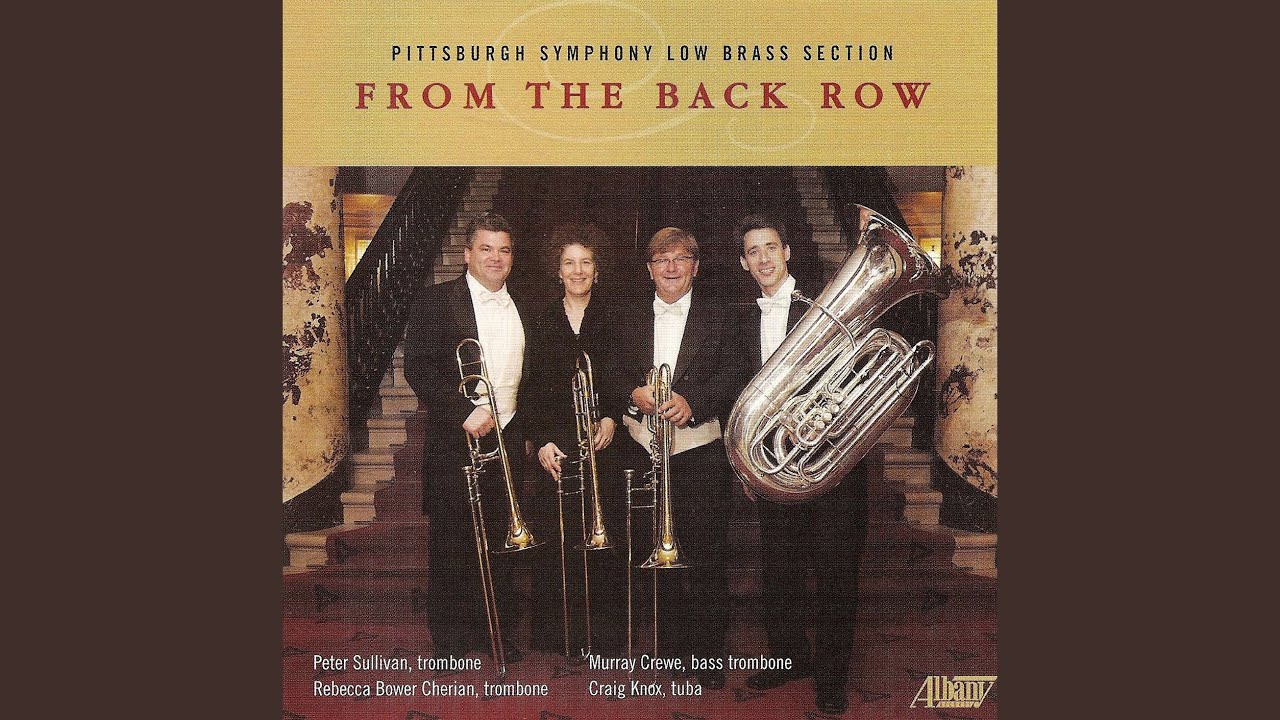
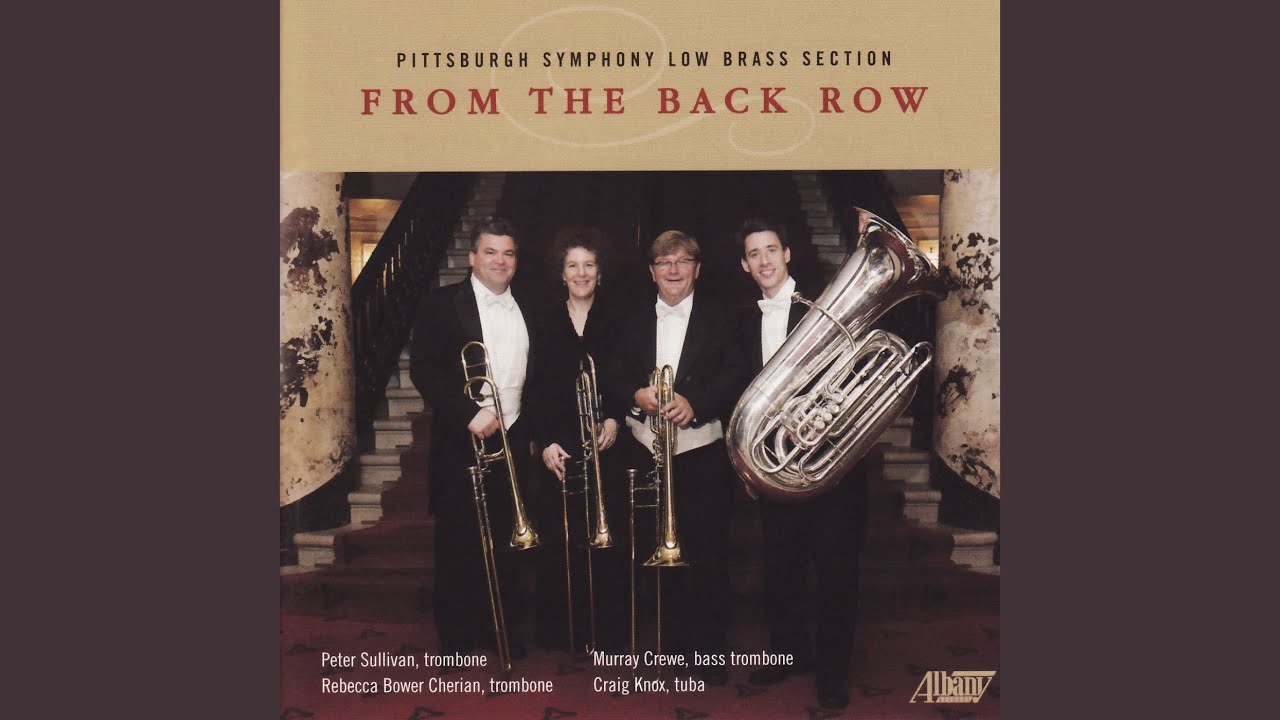
Mr. Knox has been an active chamber musician for many years, having co-founded the Center City Brass Quintet, which has performed in recital throughout the United States and Japan, and been heard numerous times on Performance Today. Its six recordings on the Chandos and Octavia labels have met with critical acclaim, the first being described by American Record Guide as “one of the all-time great brass quintet recordings.” In addition, he played for several seasons with the Chicago Chamber Musicians Brass Quintet — with which he recorded for the Naxos label — and has toured with the Empire Brass. In 2008, the Albany label released a CD recording featuring Knox and his colleagues in the Pittsburgh Symphony low-brass section titled From the Back Row, which was called “hauntingly beautiful” and “hair-raising” by the American Record Guide.
Prior to his faculty positions at Carnegie Mellon University and the Curtis Institute of Music, he previously served on the faculty at Kent State University and California State University–Hayward, as well as the San Francisco Conservatory of Music, where he was Director of the Brass Chamber Music program. He has presented master classes and recitals around the world, including at the Music Masters Course in Kazusa (Japan), the International Brass Symposium (Italy), Tainan National University (Taiwan), the Bruckner University of Music (Linz, Austria), Stuttgart Conservatory (Germany), the National Orchestral Institute (University of Maryland), the National Youth Orchestra of the U.S.A. (Carnegie Hall) and the New World Symphony, as well as the Eastman School, University of Michigan, Indiana University, Yale University and the Glenn Gould School in Toronto, among many others.
A native of Storrs, Connecticut, Knox began formal musical studies on the classical guitar at age six, and took up the baritone horn in the fifth grade. At age 11, while attending a summer music camp, he was so enamored of the student orchestra that he switched to tuba so he could pursue a life in music as an orchestral performer. His first teachers included Gary Ofenloch, Samuel Pilafian, and Chester Schmitz, and he attended the Curtis Institute of Music, where he studied with Paul Krzywicki of the Philadelphia Orchestra, and earned a Bachelor of Music degree.
“Mr. Knox played with assurance and complete command of his instrument, providing a convincing case for the solo potential of the tuba.”
—Pittsburgh Post-Gazette
Recommended Recordings
Recommended books
Articles and Blogs
- The Rest of the Story
- A Few Thoughts on Equipment
- Let Go and Share the Music
- Tuba Repertoire and Study Materials
- “The Fourth Valve” Interview
- Recommended Breathing Resources
The Rest of the Story: Lessons Learned Which May Be Helpful to the Aspiring Musician
by Craig Knox
My formal biography outlines the accomplishments and positions I have attained, as well as some of my more prestigious activities along the way. But that biography does not tell the entire story. As is the case with virtually every successful performer, there are countless small steps, disappointments and failures along the way. Not included in my biography are the parades I have played in the rain, the quintet gigs played in sub-freezing temperatures, the many rejection letters, and the dozens of auditions I took without success. Several of my teachers helped to prepare me to survive those experiences, by telling me of their own perseverance. The late Glenn Dodson – longtime Principal Trombone of the Philadelphia Orchestra, and one of my teachers at the Curtis Institute – told of the eight auditions over several years he played for Eugene Ormandy: each time being rejected, but continuing to return time and time again until he finally won the coveted position. It’s a story that demonstrates that determination and self-confidence are just as important as talent and preparation. Woody Allen famously said that “80% of success in life is just showing up”, and this can really be true in the music business…as long as you’re willing to show up over and over again, without giving up.
From my own experiences I have learned some valuable lessons, some of which may be helpful to those of you seeking a career in music. The first is to make it a point to learn from all of your experiences, both good and bad. Here is a specific exercise I encourage you to try…create a log of your performances, and divide it into two categories: those which went very well, and those that went poorly. You can obviously log performances as they happen, but you can also think back to past performances that stand out in your memory. These can be auditions, juries, recitals, ensemble concerts, even lessons. In your log, make notes about your preparation, your mental approach and state of mind, the physical approach and techniques you used, and the musical ideas which you used in each of these instances. Be as honest and specific as you can. As you add more experiences to the log, you should be able to see patterns emerge in which there are certain commonalities among the performances which went well, and others for the performances that you were not happy with. It is then up to you to find ways to nurture the productive habits and eliminate the negative ones. (For more on strategies to help with this, I recommend the teachings of performance coach Don Greene, particularly his book Fight Your Fear and Win.) In any event, I urge you to study your failures so that you can learn from them; in doing so, you can salvage something positive from the experience to help you towards success.
My next suggestion is to stop waiting for opportunities to come your way, and to start creating them for yourself. It is very easy to become singularly focused on preparing for auditions and winning a job. That is certainly a worthwhile endeavor, but for tuba players especially, it can be a long wait between auditions. Even as a student or a freelancer, it is too easy to wait around for someone to assign you a project or call you on the phone for a gig. Rather than waiting for the world to send you an engraved invitation, get to work creating something of value which you can bring to the table. Again, looking back on my own experiences, I realize that quintet playing is something that I have been involved in throughout my entire career, even during long periods of time during which I was taking auditions looking for employment. These groups were almost always something I had a direct hand in creating and organizing, and although we often performed for a fee, we just as often did not. The Center City Brass Quintet is a perfect example: in our early years – just out of school and living in four different cities – we went to great lengths to travel across the country to meet for rehearsals and concerts which we self-presented for no fee. No one hired us or asked us to play…we would just find an available venue and play a concert for whomever showed up. For one of our first concerts, the only free venue we could find was a dance studio; we were given use of the room with the understanding that no shoes were allowed to be worn. We played the performance in our socks, and the audience had to remove their shoes to hear the concert. Quintet playing is just one example of a productive use of your creative energy, but it is a good one because it demands a soloistic level of performance in an ensemble situation. In any event, the point is to take responsibility for creating the highest level of performance opportunities for yourself. At various times when professional opportunities were scarce for me, I poured my energy into developing myself as a musician: learning a new clef, working on ear training, preparing a solo or chamber music recital, studying the work of other artists, or playing for and practicing with colleagues. These endeavors turned what could have otherwise been frustrating periods into challenging and rewarding experiences which paid off later. One of my teachers – Sam Pilafian – once told me that Leonard Bernstein told him: “put your energies into the music making, and the career will follow”. Advice from Leonard Bernstein via Sam Pilafian is as good as gold, as far as I’m concerned!
Speaking of music making, take a moment to think about why you are pursuing a career in music. More than likely, you had some pretty exciting, rewarding, joyous experiences early on that made a strong impact on you and those who heard you play. After responding to those positive experiences by making a decision to study music seriously and become a professional, it may be hard to maintain (or even remember) the original intention and motivation behind your chosen path. Everybody knows that the music business is about as competitive as it gets, and it’s very easy to get so consumed with succeeding that you forget why you are doing it, or more importantly…what you are trying to do. Especially for orchestral musicians – for whom auditions are the only way in the door – and even more especially for tuba players – for whom professional auditions take place as seldom as once a year – it’s hard not to focus on winning the audition, instead of playing a great musical performance. What’s the difference? Well, focusing your energies on winning an audition puts a lot of emphasis on who your competition is, what the judges think, whether you will play well or mess up, and whether or not you will win…in short, focusing on things you cannot control, and on what the outcome will be. Focusing your energies on your musical performance means thinking about sound, phrasing, and delivering an emotional impact to the audience…this is stuff you have control over, and furthermore they are the only things you used to think about when you first discovered music. In short, focusing on winning the audition does not necessarily help you play your best, but focusing on your best, most committed performance just might win the audition. So, next time you are faced with a daunting performance or audition situation, try going back to your earliest roots as a musician, and stay focused on the music.
A Few Thoughts on Equipment
by Craig Knox
It is all too easy to look to equipment as a means to solve playing deficiencies. Some players are constantly hoping that a new mouthpiece, instrument or custom adjustment will fix all their problems, and the huge variety of equipment which is now available only makes this syndrome even more of a wild goose chase. Common sense tells us that this approach is not the answer. Some players realize this and take the exact opposite tack, shunning experimentation with new equipment, and focusing only on practice instead. For many years, I was one of those people. I put all of my effort into honing my ability as a player and musician. In fact, I clung to the equipment I had played for years, both because I was committed to its sound, and because I purposely didn’t want to get sucked into chasing after the perfect set-up. To be sure, spending those years developing my technique and musicianship was productive; but I also learned the hard way that by ignoring the role of equipment I was depriving myself of the opportunity to sound my very best.
“A great player will sound great whether they are playing a new state-of-the-art instrument or a 50-year-old clunker” is the kind of statement I have heard many times from brass players who are wary of the equipment arms-race. And this is certainly true. A great musician with a great concept of sound will always sound distinctive, no matter what instrument they are playing. But the one angle that is sometimes missed is that that same great player will sound even better on an excellent instrument which is well suited to them. And what happens when there is more than one “great player” in the room? It is at auditions where small differences between numerous “great players” become very important, and there is no doubt that equipment plays a role. Over the years observing auditions both as a candidate and an adjudicator, I’ve noticed that – while there are certainly some auditions in which one stand-out player steals the show (and the job) – very often there are two or maybe three finalists who for all intents and purposes are all qualified for the position, and who make it very difficult for the committee to come to a decision. In these situations it can be a very small or subtle detail which ultimately makes the difference. If you are lucky enough to find yourself in the finals of an audition, you want to know that you are as comfortable and capable on your instrument as your competition is on theirs. In this situation, even small equipment upgrades, tweaks and custom modifications can make a difference. Even if you think a small tweak amounts to, say, a 1% improvement in playability, the fact is that a few modifications can add up to 5%…and you’ll be glad for that 5% when you find yourself in a neck-and-neck competition.
So does this mean you should stop practicing and spend your time testing out new mouthpieces? Of course, equipment is just one piece of the puzzle, and the emphasis should always be on developing your technical ability and musicianship so that you can produce the results you want on whatever instrument you play. The answer – like everything else in life – is to find a healthy balance somewhere between obsessing about equipment, and ignoring it.
Speaking of finding balance, let’s take this to the next level and briefly discuss the question of equipment in the bigger picture. Aside from playability, a fundamental function of your instrument is to provide the basic sound quality which will define you as a player. There are as many types of sound as there are tuba players, but there are also some basic categories: bright/dark, big/small, “American”/“German”, and players often feel passionate about the camp to which they belong. As a young player, and for a long time, I was very committed to certain equipment which provided a certain sound characteristic…even though that sound did not fit the current trend. Eventually, I became more open to experimenting with different equipment and sound concepts, and it was thereafter that I started to have regular success at auditions. As much as anything, I think these changes represented a change in attitude on my part: a realization that satisfying my own preferences was less important than satisfying the listener I was playing for. It sounds obvious, but in my experience it is something that we often lose sight of: that the role of a professional musician is to serve the audience, not ourselves. Does that mean that we should give up on our own ideals of sound and style? No, but that is where the balance comes into play once again. I suggest seeking a balance between being true to yourself, and still open enough to new approaches, new sounds, and new equipment.
Let Go and Share the Music
by Craig Knox
Ingredients
An impending performance or audition.
Adequate preparation time.
A recording device (optional).
Serves
Any musician who wants to “get past the notes.”
Be Clear in Your Purpose
When preparing a piece of music for performance, it is easy to be consumed with producing a perfectly executed rendition of the work. This can be particularly true when preparing excerpts for an audition, since the “pieces” are disconnected from their true musical context and are often extremely technically challenging, to boot. If you find yourself going down this path, it is worthwhile to remind yourself what your purpose is as a musician. Remember that people do not go to a concert to witness the creation of perfection; they go to be moved. Your job is to express the joy, the excitement, the beauty of the music, and share it with the audience. If you adopt a protective stance in which your top priority is the preservation and re-creation of your “perfect” rendition, the result is likely to come across as stiff and overly engineered. No matter how clean and accurate your playing is, it is not likely to grab the listener unless you are willing to really take chances, even at the risk of imperfection. While all of this may seem obvious when contemplating a recital performance, it may not seem as relevant to auditions. Auditions, after all, are competitions in which your playing is meticulously scrutinized and judged. However, audition panels are made up of actual people who are subject to the same influences as any other audience. While an audition committee will certainly be listening for details along the way, they will always be drawn to a player who plays with ease, fearlessness, and inspired musicianship. Certainly, to be successful in an audition, you must be able to execute the excerpts, but the sooner you think of an audition committee as an audience with which to connect, the better.
Practice What You Preach
Taking chances and prioritizing communication with your audience may sound like a great idea, but the next step is to have a practice strategy that develops that ability. If you want to develop your high register, you must practice the high register; if you want to develop a great legato, you must practice legato. If you want to develop the ability to get down to sharing your music, you must practice just that.
Practice Session Advice
A typical practice session may include a lot of earnest hard work on a piece of music, followed by one or two run-throughs (perhaps with interruptions for corrections) to tie it all together. However, this approach has some unintended consequences. By the time you get around to running the complete piece of music (which is what you are preparing to do after all, right?), your head is filled with all sorts of details and objectives that you have identified and worked on during your session.
It will be very difficult at this point to put the minutiae aside and focus on the “big picture” during a run-through. Even more importantly, your run-through has now become a “test” to see how many of the details you worked so hard on you will now be able to duplicate… and that can lead to distracted and tentative playing. And, if you fail to ace all the spots you have worked on, you end up psychologically reinforcing the notion that, despite a lot of hard work, you still can’t play this piece and you’ll never be able to.
Consider this alternative
(For a piece you have already essentially learned and are now polishing for performance.)
Establish the overall character.
Give some careful thought to establishing the overall character of the piece. What style and mood are you trying to convey to the listener? What excites or touches you about this music that you want to share with your audience? Formulate a picture or a scene in your mind, or an adjective or phrase that captures the spirit of the piece. Also be as clear in your mind as you can on the details of tempo, dynamics, articulation, phrasing, etc.
Play the piece in its entirety.
Play through the piece in its entirety, as a committed performance, focusing especially on bringing out the character of the music that you established in step 1. Go for it, play with abandon, have fun, and see what happens. Record the run-through if you wish. But do not stop for any reason. Do not stop and start over because you are unsatisfied with how it is going. Do not stop to fix something or try something again.
Playing the piece all the way through without interruptions has at least two benefits: first, because you have committed to play without stopping to fix things that go wrong, your concentration will tend to improve noticeably, in an effort to get it right the first time. Second, you will gain experience playing the piece the way you will ultimately perform it in concert. Playing through without stopping may be very difficult at first, but the more you do it, the easier it will become, as your concentration improves and you have fewer and fewer reasons to want to stop!
Fix what needs attention.
Now fix the things you are not satisfied with. Consult your memory of the run-through or the recording you made, and identify the spots that need attention. Spend this important time using your metronome, tuner, and other practice methods (this is a subject for another chapter!) to really work the details and address the problems as completely as you can.
Leave it.
This step may be as hard for you as step 2. You may feel compelled at this point to run it through again (and again!) to see if you can do it better. But have trust in yourself that the progress you made in step 3 will stay with you and still be there when you run the piece in tomorrow’s practice session. Having trust in oneself is perhaps the most important trait for a musician and, when developed, allows you to really focus on the music when performing.
Performing for People
Performing for others is the best way to practice performing music. When preparing for a performance, find people to play for ahead of time, whether they are family members, classmates, friends, teachers, or colleagues. Take it a step further, and seek out performance opportunities wherever you can find them. Play at a school, nursing home, hospital, church, or community center. Performing in any of these settings will help you develop the confidence to play your best in other situations, such as a recital, jury, competition, or audition.
Really, though, these sorts of “practice concerts” are more than a means to an end. Performing for other people—in any situation—is what it’s all about. Ideally, you will realize that as a musician, your job is always the same: to share your most committed musical performance with your audience, no matter who they may be.
Tuba Repertoire and Study Materials
Craig Knox, Instructor
(revised 7/23)
Most sheet music materials available at: www.hickeys.com
* = core materials
Equipment
- * metronome, tuner, and tone generator app (Tonal Energy recommended)
- * quality recording device (preferably with video) with built-in or external microphone, such as Zoom H1, H2 or H4
- * breathing tube (4″ length of 3/4″ diameter PVC pipe)
- * mouthpiece rim visualizer (www.windsongpress.com)
- * mouthpiece resistance piece (e.g. BERP, Chops Dyno, Buzzard, or plastic tube)
Studies
- * Arban: Method for Tuba (or Trombone)
- * Bach: Cello Suites (Barenreiter Edition)
- * Baer: Tonic/Dominant Scales for Tuba
- * Baer: Cross-Training Scales for Tuba
- * Blume: 36 Studies for Trombone with F-attachment
- * Bordogni/Rochut/Raph: Melodious Etudes for Trombone (or Tuba edition by Wesley Jacobs)
- * Blazhevich: 70 Studies
- * Charlier: Transcendental Etudes (for trumpet)
- * Wesley Jacobs: Low Register Studies
- * Kopprasch/Young: 60 Studies
- * Snedecor: Low Etudes for Tuba, Low(er) Etudes for Tuba
- Bach/Bixby/Bobo: Bach for the Tuba
- Brad Edwards: Simply Singing for Winds
- Brad Edwards: Tuning Drone Melodies
- Tom Ervin: Twenty Counterparts (Duets for Bordogni-Rochut book)
- Getchell: First Book of Practical Studies
- Grigoriev: 78 Tuba Studies
- Wesley Jacobs: Developing High Register (3 volumes)
- Lapins: Dueling Fundamentals
- Ostrander: Shifting Meter Studies
- Pedersen: Advanced Etudes for Bass Trombone
- Pilafian/Sheridan: The Brass Gym
- Verne Reynolds: 48 Etudes
- Schlossberg: Daily Drills and Technical Studies
- Tyrrell: Advanced Studies
- Vasiliev: 24 Melodious Etudes
- David Vining: Long Tone Duets
Study Materials, Other
- Stephen C. Colley: TuneUp Systems (www.tuneupsystems.com)
- Quality Tones (app)
- Kenneth Amis, ed.: The Brass Player’s Cookbook
- Timothy Gallwey: The Inner Game of Tennis
- Don Greene, PhD: Fight Your Fear and Win, Performance Success, Centering
- Brad Stulberg & Steve Magness: Peak Performance
- Jeffrey Agrell: Improvisation Games for Classical Musicians
- David McGill: Sound in Motion – A Performer’s Guide to Greater Musical Expression
Solos
(Abridged list example; include full version as needed)
- Albinoni/Hilgers: Concerto
- Anderson: Lyri-Tech I
- Arnold: Fantasy for Tuba
- Arutiunian: Concerto
- Ayers: The Dancing King
- Baadsvik: Fnugg
- * Bach: Cello Suites (Barenreiter Edition)
- Bach/Bell: Air and Bouree
- Bach/Cooley: Partita in a minor
- Bach/Rougeron: Sicilienne
- Barat: Introduction and Dance
- Barnes: Concerto
- Beach: Lamento
- * Broughton: Sonata
- * Casterede: Sonatine
- * Grant: Three Furies
- * Gregson: Concerto
- * Hartley: Suite for Unaccompanied Tuba
- * Hindemith: Sonata
- * Penderecki: Capriccio
- * Persichetti: Serenade No. 12
- * Plau: Concerto
- * Plog: Three Miniatures
- * Vaughan Williams: Six Studies in English Folksong
- * Vaughan Williams: Concerto
- * Wilder: Suite No. 1, “Effie”
- * John Williams: Concerto
Core Band Excerpts
- Bernstein: Symphonic Dances from West Side Story
- Fucik: Entry of the Gladiators
- Grainger: Rufford Park Poachers from Lincolnshire Posy
- Hindemith: Symphony in Bb
- Holst: First Suite in Eb
- King: The Melody Shop March
- King: Barnum and Bailey’s Favorite
- Sousa: Stars and Stripes Forever
- Vaughan Williams: Toccata Marziale
- Wagner: Overture to Rienzi
Core Orchestral Excerpts
Orchestral tuba parts from IMSLP, Cherry Classics
- Berlioz: Symphonie Fantastique, Hungarian March
- Brahms: Symphony No. 2
- Bruckner: Symphonies 4, 7, 8
- Franck: Symphony in D minor
- Gershwin: An American in Paris
- Mahler: Symphonies 1, 2, 5, 6
- Mussorgsky/Ravel: Pictures at an Exhibition
- Prokofiev: Symphony No. 5; Lt. Kije
- Respighi: Fountains of Rome
- Shostakovich: Symphonies 5, 9, 10
- Strauss: Ein Heldenleben, Till Eulenspiegel, Also Sprach Zarathustra
- Stravinsky: Petroushka
- Tchaikovsky: Symphony No. 6
- Wagner: Meistersinger Overture, Ride of the Valkyries
Basic Listening Study List
All of the Core Orchestral Excerpts, as well as:
- Bach: Cello Suites; keyboard works
- Beethoven: Symphonies
- Berlioz: Damnation of Faust
- Bernstein: Symphonic Dances from West Side Story
- Brahms: Symphonies; German Requiem; Overtures
- Debussy: La Mer
- Dvorak: Symphonies 8, 9
- Hindemith: Mathis der Maler; Concert Music for Strings and Brass
- Janacek: Sinfonietta
- Kodaly: Hary Janos Suite
- Mahler: Symphonies; Lieder
- Mozart: Symphonies; operatic works; overtures; horn concerti
- Respighi: Roman Trilogy (Pines, Fountains, Festivals)
- Shostakovich: Symphonies 1, 5, 6, 7
- Sibelius: Symphonies 1, 2, 5
- Strauss: Tone Poems; horn concerti; operas
- Stravinsky: Rite of Spring
- Tchaikovsky: Symphonies 4, 5, 6; Romeo and Juliet
- Verdi: Opera overtures
- Wagner: Operas; overtures
Craig Knox, of The Pittsburgh Symphony Orchestra, Center City Brass, and The Curtis Institute — Enters “The Fourth Valve”
Interview by David Brubeck •
Overview
This conversation touches on Craig Knox’s formative brass-quintet years at Curtis, his instrument choices across orchestral, chamber, and solo settings, articulation concepts rooted in sound first, and composers whose orchestrations showcase the tuba’s color and versatility.
Highlights
- Center City Brass Quintet: origins at Curtis, rigorous rehearsal habits, and decades of touring and recording.
- Equipment palette: why multiple tubas (CC, BB♭, F) can serve different repertoire and colors.
- Articulation: “sound first, articulation second”—practice slurred, then overlay tongue for clarity.
- Composers/orchestration: shout-outs to Prokofiev, Mahler, Wagner, Strauss, and contemporary voices.
- Chamber directions: interest in mixed instrumentation (e.g., tuba with strings; tuba/horn/piano).
Selected Quotes
“We formed the group on our own and went to the administration to request coaching.”
“I think of sound first, and articulation second.”
“There are incredibly beautiful, evocative moments [for tuba] in Romeo and Juliet.”
Read the full interview on davidbrubeck.com
Source: David Brubeck, “The Fourth Valve” series. Accessed for summary and quotes.
Breathing for Singing — Two Guides from SingWise
Source: SingWise (Karyn O’Connor). These articles clarify correct breathing, “support,” and appoggio in practical, anatomical terms.
Correct Breathing and “Support” for Singing
Core idea: Breath fuels the voice; singing demands quick, deep inhalation and a slow, steady, regulated exhale. “Support” is best understood as deliberate breath management (steady flow + appropriate pressure), not vague “breathe from the diaphragm” slogans.
Key points
- Breathing is both autonomic and consciously trainable; singers must elongate the breath cycle for phrases and sustained tones.
- “Support” focuses on regulating the amount and steadiness of airflow past the folds, coordinating torso muscles with laryngeal function.
- “Diaphragmatic breathing” is often misunderstood; training emphasizes the muscles that interact with the diaphragm (appoggio concept).
Selected quotes
“Good breath management skills are imperative if a singer hopes to be able to sound great and to sing with skill.”
“There are two important aspects of breath management: 1) regulating the amount of air… and 2) ensuring that the stream of air is steady.”
Read the full article on SingWise
Summary & quotes from SingWise: “Correct Breathing and ‘Support’ for Singing.”
Breath Management (“Support” of the Singing Voice)
Core idea: Two teaching schools are contrasted: abdominal “push” vs. the appoggio inspiratory-hold approach that slows the diaphragm’s rise by engaging inspiratory muscles, maintaining steadier subglottic pressure and tone.
Key points
- Singing needs a higher rate of breath energy and a lengthened breath cycle vs. speech; this requires trained muscle coordination.
- Appoggio: keep sternum raised, lateral ribs expanded, inspiratory muscles gently active to pace the exhale and stabilize the tone.
- Common pitfalls: “tanking up” (overfilling), pushing air, or holding back air at the glottis—each destabilizes pressure and tone.
- Good posture supports better breathing; classic drills (e.g., Farinelli exercise) cultivate the inspiratory hold and subtle renewals.
Selected quotes
“When it comes to supporting the tone… there are two schools of teaching: 1) a contracting of the abdominal muscles; and 2) an ‘inspiratory hold’ (appoggio).”
“With the diaphragm kept in a lower position for longer… endurance increases because [singers] are no longer pushing the air out as rapidly.”
Read the full article on SingWise
Summary & quotes from SingWise: “Breath Management (‘Support’ of the Singing Voice).”